

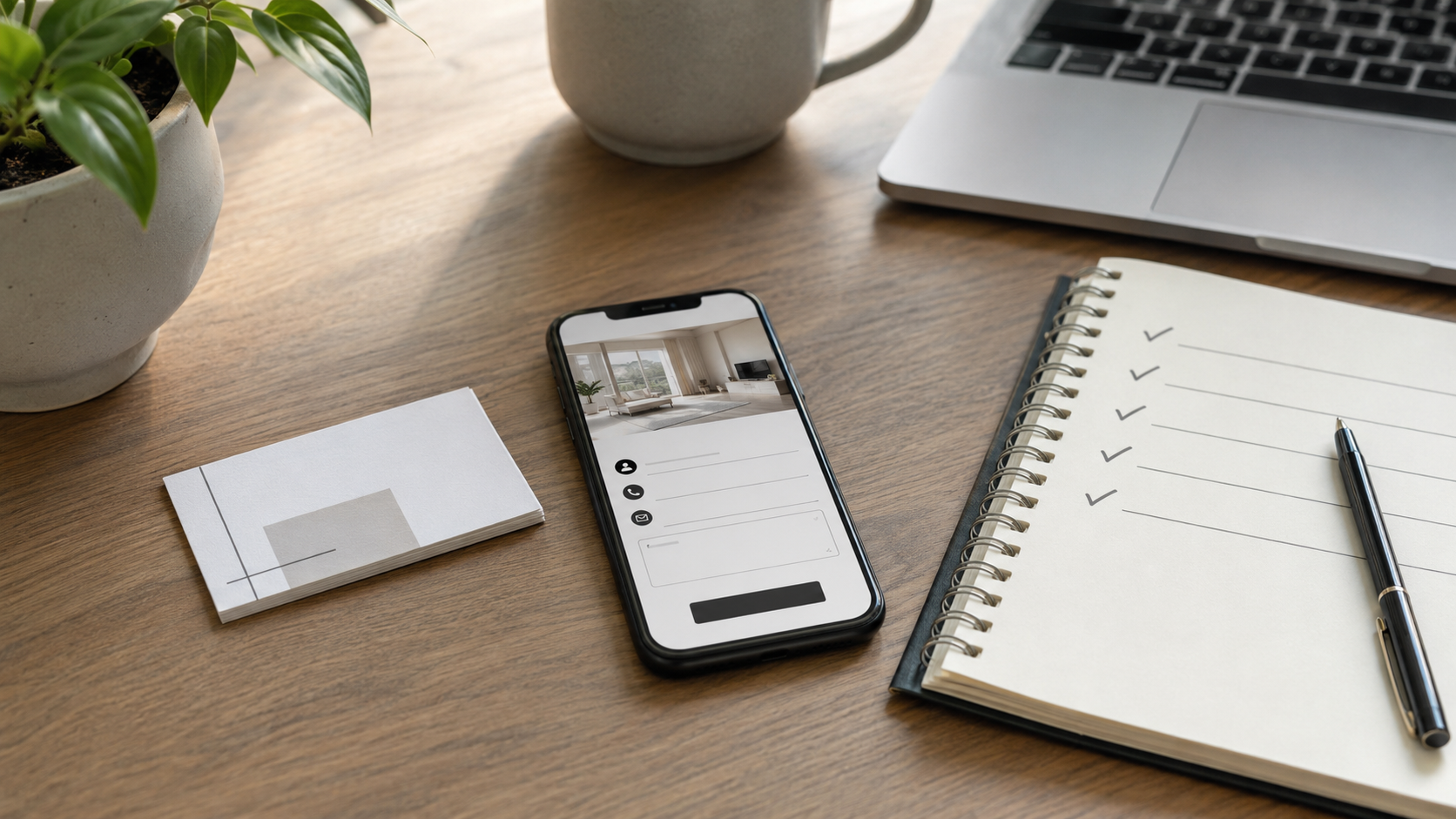
A lot of new agents spend too much time trying to make their business card look impressive.
They compare paper weights. They look at headshots. They debate colors, taglines, QR codes, luxury finishes, and whether the card should feel more modern or more personal.
None of that is wrong. But it is not the first job of the card.
Your business card is not supposed to prove that you are a top producer. It is supposed to make it easy for the right person to remember you, contact you, and understand who you are connected to professionally.
That is a smaller job. It is also a more useful one.
The Advice You Have Probably Heard
Most business card advice sounds like this:
- Make it stand out.
- Use a strong headshot.
- Add a QR code.
- Use premium paper.
- Include your website and socials.
- Make it memorable.
That advice is not useless. A card that is hard to read, flimsy, cluttered, or off-brand can work against you.
But new agents often hear that advice and turn the business card into a confidence project. They try to design a card that makes them feel less new.
That is where the advice starts to break.
Why That Advice Feels Incomplete
A new agent usually does not have the same problem an experienced agent has.
An experienced agent may need a card that supports an already clear reputation. A new agent needs a card that helps a real conversation continue without creating confusion.
That means the card has to answer four basic questions fast:
- Who are you?
- What is your professional role?
- Which brokerage are you with?
- What is the easiest next step to contact or save your information?
If your card cannot do that cleanly, the finish, color, and clever line do not matter much.
The hidden issue is not design. It is clarity.
New agents often want the card to create credibility for them. But credibility comes more from being clear, reachable, prepared, and compliant than from trying to look more established than you are.
The Useful Truth Inside the Advice
Presentation still matters.
People do make quick judgments about whether your materials feel professional. A clean card can signal that you take your business seriously. A readable card makes it easier for someone to use it later. A QR code can help bridge the gap between paper and digital follow-up.
So the point is not to ignore design.
The point is to put design in the right order.
Your business card should be built from function first, then compliance, then brand, then polish.
The Agent Unlocked Reframe
Do not design your business card as a tiny ad.
Design it as a handoff tool.
A handoff tool has one purpose: it helps the next action happen smoothly.
That next action might be saving your contact, texting you, checking your website, scanning your QR code, or remembering which brokerage you are affiliated with.
This takes pressure off the card. It does not need to tell your whole story. It does not need to carry your entire brand. It does not need to make you look like someone you are not yet.
It needs to make the next step obvious.
The Operating Standard
Before you order cards, build the card around this standard:
1. Make it compliant
Start with your broker, state rules, and any association or brand standards that apply to you.
Business cards can count as advertising or first point of contact materials in many places. That means your card may need specific information such as your licensed name, license status, license number, brokerage name, office phone, brokerage address, or required marks.
Do not guess.
Ask your broker or compliance team: "Can you review this card before I order it?"
This is not a fear move. It is a professional move.
2. Make it clear
The front of the card should make the basics easy to find:
- Your name
- Your correct professional title or license status
- Your brokerage name as required
- Your phone number
- Your business email
- Your website, broker profile, or digital card link
- Any required license or trademark information
If someone has to search for the phone number, the card is working too hard.
3. Make it saveable
A card is only useful if the person can keep using your information later.
That can mean a QR code that opens a digital card, contact page, broker profile, or website. It can also mean writing "call/text" before your phone number if texting is appropriate in your market and allowed by your brokerage standards.
Do not send people to a confusing link with six possible paths. Send them to one place that helps them save your contact or take the next step.
4. Make it conversation-ready
Your card should fit the conversations you are actually having.
If you are mostly meeting neighbors, open house guests, vendors, lenders, inspectors, or friends of friends, the card should feel approachable and clear. It does not need to scream luxury unless that is truly your market and brand direction.
A good test is simple: would you confidently hand this to a real person after a normal conversation?
5. Order small first
New agents change fast.
Your brokerage, website, CRM, phone setup, headshot, niche, or messaging may shift during your first year. Instead of ordering a huge box, order a small batch after broker approval. Use them in real conversations, then improve the next version.
What Counts and What Does Not Count
Here is what counts as progress:
- You asked your broker to review the card before printing.
- Your required license and brokerage details are correct.
- Your phone, email, and website or digital card are easy to find.
- The card has enough white space to be readable.
- The QR code works when scanned from a normal distance.
- The card supports one clear next step.
- You keep a few cards in your car, bag, open house kit, and desk.
Here is what does not count:
- Saving twenty design examples but ordering nothing.
- Choosing a dramatic tagline before your required information is checked.
- Adding every social platform you have ever opened.
- Using the REALTOR mark as if it were your license status.
- Printing a large batch before your broker approves the card.
- Making the card so clever that people cannot quickly tell how to reach you.
The goal is not perfection. The goal is a usable card that can survive a real conversation.
What If I Do Not Have a Brand Yet?
You do not need a fully developed personal brand to order a useful business card.
You need a clean professional handoff.
Use your brokerage-approved visual standards. Keep your colors simple. Use a current headshot only if it helps people remember you and meets brokerage standards. Choose readable type. Avoid clutter.
Your early brand is not your logo. It is how prepared, clear, and easy to work with you are.
A simple card that works is better than a delayed card you keep redesigning because you are trying to feel more ready.
Your Next Move
Open a blank document and write the information your card must include.
Then send one message to your broker or manager:
"I am putting together my first business card. Can you confirm the required brokerage, license, title, logo, and trademark details before I send it to print?"
After that, choose one clean design, add one saveable next step, test the QR code if you use one, and order a small first batch.
Final Thought
A business card will not build your business by itself.
But it can help you stop losing the small opportunities that happen after a good conversation.
Build the card like a professional handoff. Make it compliant. Make it clear. Make it easy to save. Then put it in motion.
That is enough for version one.
Key Takeaway
Your first business card does not need to make you look established; it needs to make you easy to trust, contact, and remember after a real conversation.
Resources Used
- Trademark/Logo Use with Member's NameNational Association of REALTORS
- What is the required information that must be provided in advertisements such as signs, email and business cards?Texas Real Estate Commission
- License Disclosure Requirements for Advertising RE 559California Department of Real Estate
- Real Estate Business Card Tips for SuccessZillow Premier Agent
- The Ultimate Guide to Real Estate Business CardsHousingWire
- 10 Real Estate Business Card Ideas and ExamplesForbes Advisor