

Hosting your first open house can feel intimidating. You might worry about answering difficult questions, dealing with empty rooms, or figuring out how to turn casual visitors into actual clients. But your first open house is less about selling that specific property and more about generating leads for your own pipeline.
When you approach it with a clear plan, it becomes one of the most cost-effective ways to meet active buyers in your market. Here is a practical checklist to help you prepare, execute, and follow up like a professional.
The Week Before: Marketing, Signage, and Brokerage Prep
Preparation starts days before the weekend. Do not wait until Friday afternoon to get your materials together.
- Marketing: Post about the open house on your social media channels and send an email to your sphere of influence. Even if they aren't looking to buy, it shows your network that you are active and working.
- Signage: Secure your directional signs. If you don't own any yet, ask to borrow some from your brokerage or the listing agent.
- Neighborhood Outreach: Consider knocking on 20 to 30 doors around the property to invite the neighbors. Neighbors love to see the house, and they might be thinking of selling soon themselves.
Note: Always confirm local municipal rules, HOA guidelines, and state advertising regulations regarding where and when you can place open house signs.
The Open House Survival Kit: Essential Items to Pack
Pack a bag the night before so you aren't scrambling on Saturday morning. A well-prepared agent brings:
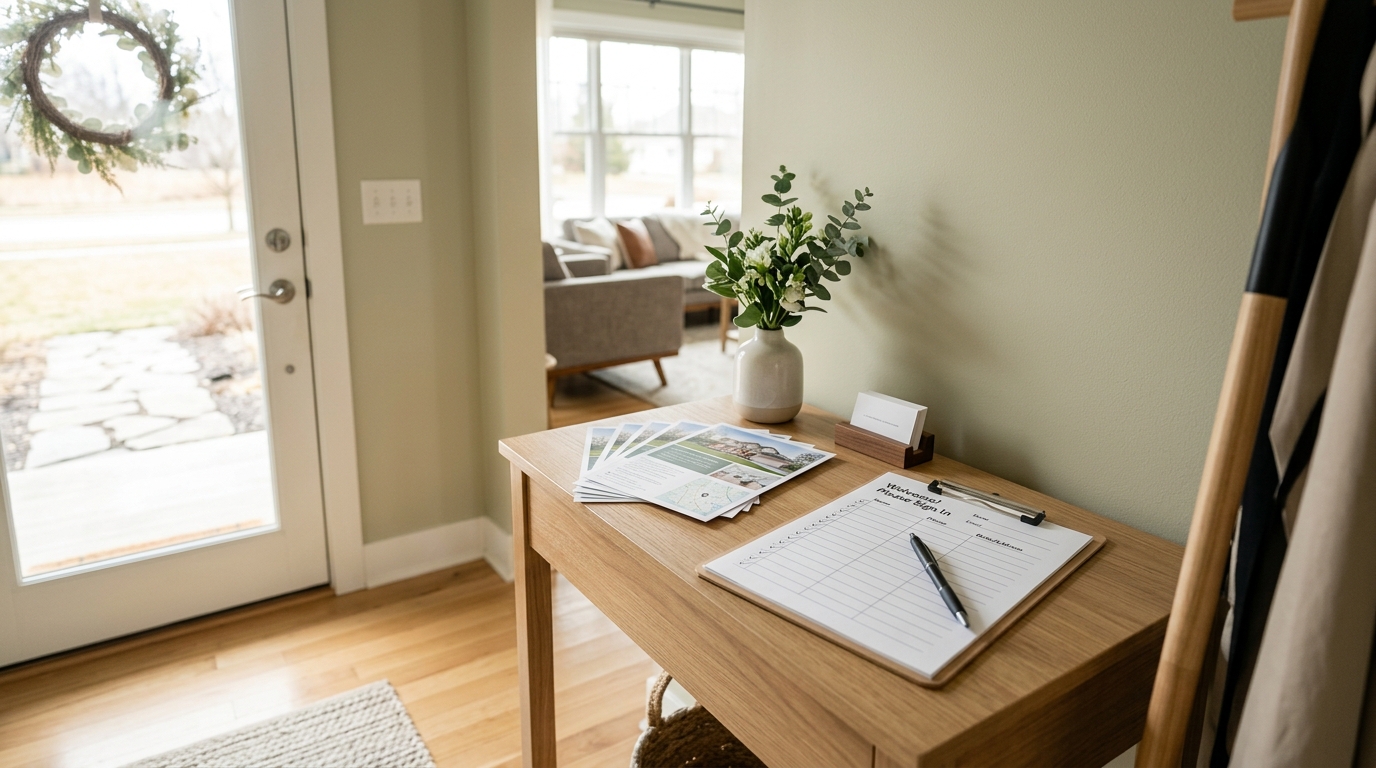
- Sign-in materials: A clean clipboard with sign-in sheets (or a tablet with a digital sign-in form) and plenty of working pens.
- Marketing collateral: Printed property flyers, a copy of the MLS sheet for your reference, and your business cards.
- A tape measure: Buyers constantly ask if their specific furniture will fit in a room.
- Basic cleaning supplies: Paper towels, glass cleaner, and a small trash bag to handle last-minute smudges or messes.
- Refreshments: Bottled water for yourself and guests.
- Tech essentials: A fully charged phone and a portable battery charger.
Day-Of Setup: Arriving Early, Safety Checks, and Staging
Arrive at the property at least 45 to 60 minutes before the start time. This gives you a buffer in case you hit traffic or the house needs a quick tidy.
- Sign Placement: Put your directional signs at major intersections leading to the house to capture drive-by traffic.
- Staging the Environment: Walk through the entire house. Turn on every light (even in closets), open all the blinds to let in natural light, and make sure toilet seats are down.
- Safety Check: Unlock the front door and check the backyard access. Take note of your exits. It is always a good practice to have a buddy system or let someone at your brokerage know your exact schedule and location for safety.
The Conversation Plan: Low-Pressure Scripts for Greeting Visitors
When visitors walk in, avoid pouncing on them with an aggressive sales pitch. Use a calm, low-pressure approach to build rapport.
- The Greeting: "Welcome! Feel free to take a look around. I'll be right here in the kitchen if you have any questions."
- The Follow-Up: Once they have walked through a few rooms, approach them naturally. "Are you folks from the neighborhood, or are you looking to move into the area?"
- Handling Unknowns: If they ask a question you don't know the answer to, do not guess. Say, "That is a great question. I want to make sure I give you the exact right answer. Let me check with the seller and get back to you later today." This is a perfect, natural opening to ask for their phone number.
The Sign-In Strategy: How to Capture Contact Info Naturally
Capturing contact information is your primary goal, but many visitors are hesitant to leave their details. Give them a logical reason to do so.
- The Security Approach: "The sellers have asked that everyone sign in for security purposes before walking through the home."
- The Value Approach: "If you'd like, sign in here and I can send you a list of similar homes in this school district later this afternoon."
Keep the sign-in sheet simple. Asking for too much information reduces the likelihood they will fill it out. Stick to Name, Phone Number, and Email.
The Post-Open House Routine: Immediate Follow-Up and Seller Feedback
The fortune is in the follow-up. What you do after the doors close determines the actual success of the event.
- Immediate Follow-Up: Send a quick text or email to everyone who signed in within two hours of the open house ending. Keep it simple: "Hi [Name], thanks for stopping by the open house on Main Street! Let me know if you'd like me to send over the property disclosures or if you want to see any other homes this week."
- Seller Feedback: Send a summary report to the seller (or the listing agent, if you are hosting for someone else). Include the number of groups that came through, the general level of interest, and any recurring feedback about the price or condition of the home.
Disclaimer: Real estate income varies widely and depends on your market, brokerage, expenses, pipeline, lead generation, conversion rates, and execution. Always confirm local laws regarding advertising, fair housing, contracts, and licensure before hosting public events or implementing new marketing strategies.
Key Takeaway
A successful first open house relies on packing the right tools, using low-pressure conversation starters, and executing a prompt follow-up routine.
Keep Learning
Resources Used
FAQ
What if a visitor asks a question about the house that I don't know the answer to?
Do not guess. Simply say, "That is a great question. I want to make sure I give you the exact right answer. Let me check with the seller and get back to you later today." This is an honest approach and provides a natural reason to capture their contact information.
How many directional signs do I need for an open house?
Typically, you will want 4 to 6 directional signs placed at major intersections leading to the property, plus one sign in the front yard. Always verify local municipal rules and HOA guidelines regarding sign placement.
Do I need to provide food or drinks at my first open house?
Elaborate catering is not necessary for a standard open house and can sometimes distract from the property. Providing chilled bottled water is a simple, inexpensive, and welcoming gesture.